
银
Chinese conservationist explores community-based wildlife protection in Kenya_我的网站

一 |
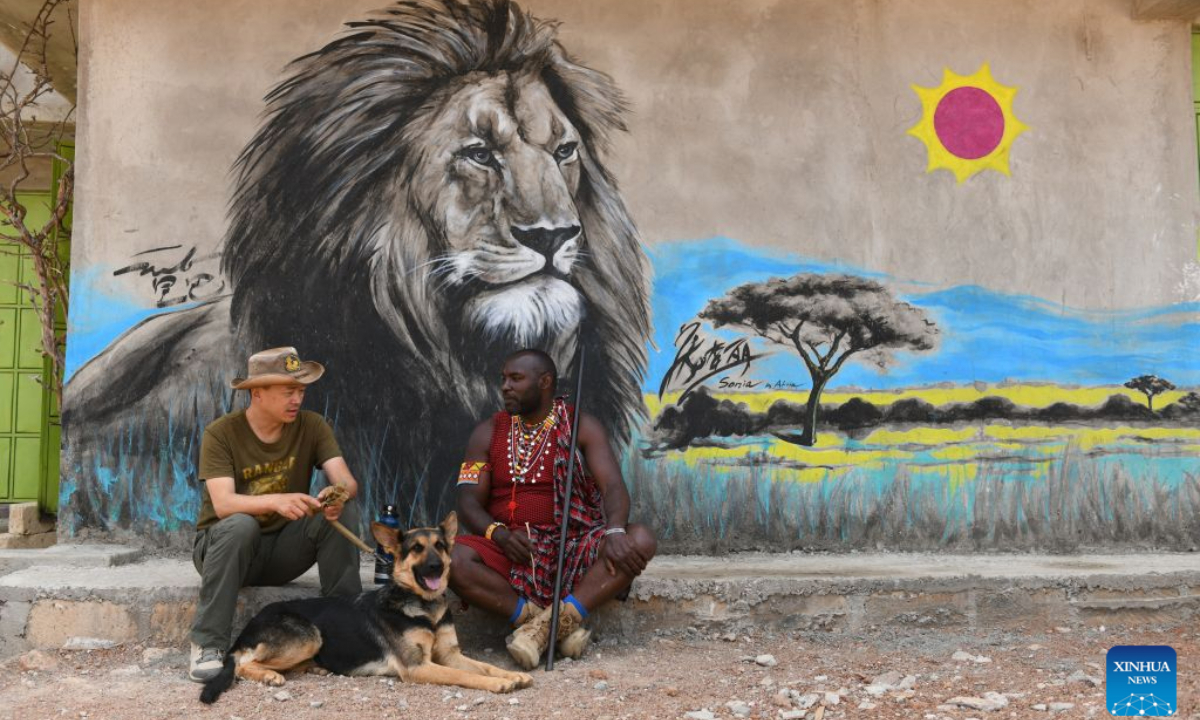
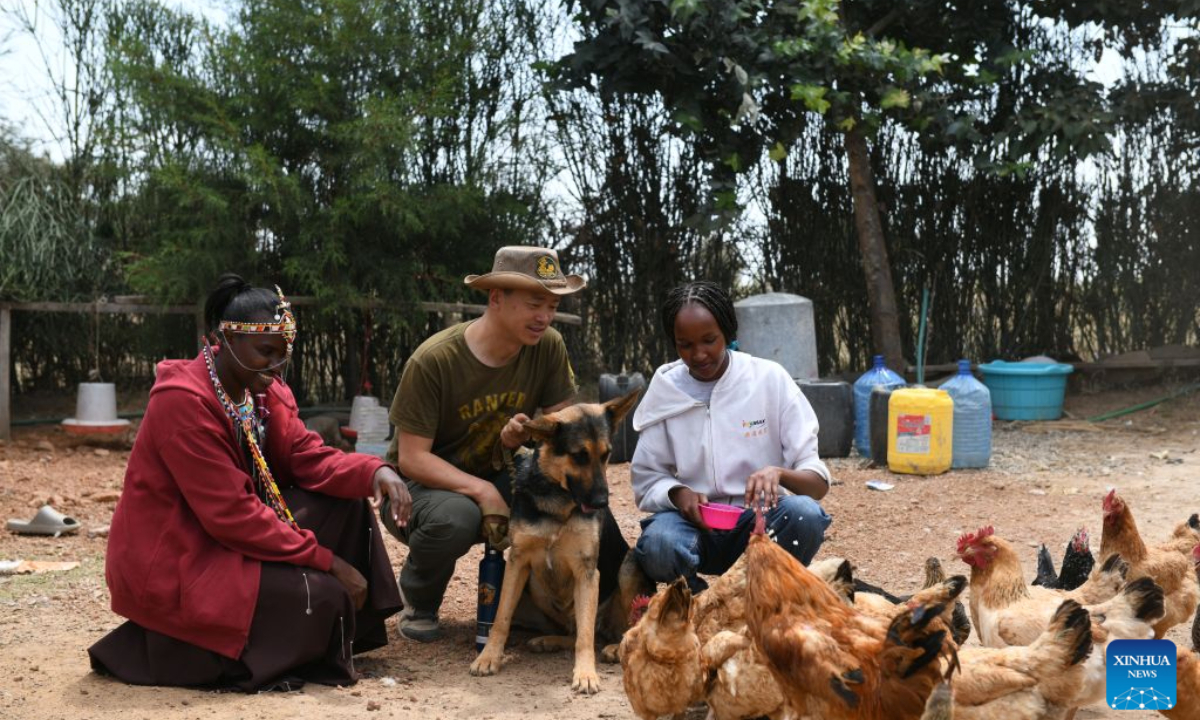
Among them is Chinese conservationist Zhuo Qiang, nicknamed "Simba," the Swahili word for lion. For him, this early-morning routine is driven by a broader mission to achieve human-wildlife coexistence.
In 2010, Zhuo left his job in China at the age of 37 and embarked on a less-traveled path: pursuing wildlife conservation in Kenya.
Without professional training in wildlife conservation, he found himself in a territory then dominated by Western organizations and local practitioners.
But Zhuo decided to stay. "I wanted to prove that Chinese people could also do wildlife conservation," he said.
Initially, Zhuo saw conservation largely through the lens of wildlife science: working in the field, studying animals and collecting data.
Living and working with Maasai communities changed that perspective. "The fate of wildlife was closely tied to the people sharing the same land," he said.
In the Maasai Mara ecosystem, livestock grazing is deeply connected to the livelihoods of pastoral communities. "If local people are asked to stop grazing but are given no alternative source of income, conservation cannot be sustainable," Zhuo said.
That principle laid the foundation for his work with the local community in establishing the Ol Kinyei Conservancy.
The area had suffered from prolonged overgrazing, with plants and the land itself deteriorating. Under the conservation model, local grazing land was leased and gradually restored, allowing vegetation to recover and creating a more suitable habitat for wildlife, said Zhuo.
Meanwhile, households participating in the scheme receive land-rental income and have access to jobs such as wildlife rangers and tourism workers. Their average annual income has increased from around 500 U.S. dollars to about 3,700 dollars, according to Zhuo.
Some residents from surrounding communities also learned from the experience and brought the approach back to their own grazing areas.
Nowadays, 26 private conservancies have been established around the Maasai Mara National Reserve, covering about 1,600 square km, according to Zhuo.
He believes the network of community conservancies provides additional safe space for wildlife to move and survive, extending conservation efforts beyond the boundaries of a single national reserve and into surrounding communities.
Simon Msago, a Maasai community leader in Ngoswani, said Zhuo's work encouraged more residents to take an active role in conservation.
In the past, many residents saw few direct benefits from wildlife conservation and had limited awareness of its importance. Today, community members are increasingly willing to work as rangers and protect wildlife, creating an effective layer of protection around the conservancies, Msago said.
"Human-wildlife conflict cannot be solved simply through restrictions and prohibitions. The key is to create alternative sources of income so that residents can gain tangible benefits from conservation," Zhuo said.
"That is what makes community-based conservation sustainable -- allowing local people to become part of wildlife conservation rather than bystanders with no stake in it."
While continuing his work in the Maasai Mara, Zhuo has also sought to strengthen exchanges between China and Africa in wildlife conservation.
In recent years, he has visited more than 30 nature reserves and national parks in China, sharing his experiences of community-based conservation in Africa with Chinese counterparts.
"Conservation practices in China and Africa each have their own characteristics, and there is much that the two sides can learn from each other," he added.
。 Vadh 2, starring Sanjay Mishra and Neena Gupta and written and directed by Jaspal Singh Sandhu, is gaining momentum as one of the most anticipated films of 2026. The spiritual sequel of Vadh introduces new characters in a fresh story, while preserving the essence of the original. Sharing the poster, featuring Gupta and Mishra, the makers wrote, "Sometimes What You See Isn't The Whole Truth! #Vadh2 In Cinemas from 6th Feb 2026” Take a look at it: View this post on Instagram A post shared by Sanjay Mishra (@imsanjaimishra) As the film inches closer to its release with just two months to go, the makers have further heightened the anticipation by unveiling new poster, which has come as a special treat for audiences. The striking posters featuring the powerful lead duo sets the tone for a compelling cinematic experience. In an interesting coincidence, the new posters were unveiled on 9th December 2025, the same date the original Vadh released three years ago in 2022. This unexpected alignment adds a subtle nostalgic touch for fans of the franchise. Vadh 2 has already been earning praise after making a remarkable impact at the 56th IFFI 2025. Its screening in the Gala Premiere Section drew a full house, with viewers responding with long applause and genuine appreciation for the film. The response further reinforced Sanjay Mishra and Neena Gupta’s reputation as two of India’s finest performers. View this post on Instagram A post shared by Luv Films (@luv_films) Backed by Luv Ranjan and Ankur Garg’s Luv Films, Vadh 2 is written and directed by Jaspal Singh Sandhu and produced by Luv Ranjan and Ankur Garg. Talking about the film, Sandhu shared, “I’m thrilled to share that Vadh 2 releases in theatres nationwide on 6th February 2026. We’ve poured our hearts into crafting a story that is gripping and thought-provoking, and I’m grateful to Luv and Ankur for believing in the script. I can’t wait for audiences to experience it and see you at the movies as the saga continues!” The film is slated for a theatrical release on 6th February 2026. Also Read: Sanjay Mishra And Neena Gupta Wrap Up Shooting For Vadh 2。
Current article:http://ddl41te.cheshenzhuaduanza.buzz/s44uwo/6jd2.html
Published on:05:01:06
我的网站相关内容
 国际刑事法院终于硬气了一把,没想到让自己更憋屈
 药香深处的共富密码
 Google के प्रीमियम 5G फोन पर बड़ा डिस्काउंट, iPhone 16 से भी कम हुई कीमत
 詹姆斯妻子讲诉她和詹姆斯的感情,没有她,詹姆斯就不会加盟76人
 泉州市总工会启动新一轮机关干部赴基层蹲点行动
 在武汉,生一个孩子要花多少钱?
- ·以日本现在的实力,真能打赢俄罗斯吗?俄结束战斗只需一天,洞察军事,原创 以日本现在的实力,真能打赢俄罗斯吗?俄结束战斗只需一天
- ·腾讯四季度部署NPO超节点,光互连迎来商业化窗口
- ·Lions LB Alex Anzalone's parents in Israel among group of 50+ people from church in Naples, Florida
- ·开源改写人工智能竞争规则
- ·《脳出血で活動休止から2年》タレント医師・西川史子が長期入院生活から「外来で通院」に変化…左半身麻痺から復帰を目指す現在の様子とは
- ·以军袭击联合国车辆致1死1伤,古特雷斯呼吁彻查
- ·飞乐音响:拟4350万元受让云瀚科技75%股权
- ·休媒不满联盟赛程安排!美记:KD影响力暴跌,火箭运作过少话题感不足
我的网站最新内容
- ·上半年全国广播电视服务业总收入7513.89亿元,同比增长9.15%
- ·美国友人“赛考斯”23日凌晨抵京 用中文说出“我回来了”
- ·万物皆可挂的“包挂经济”正在收割年轻人的“微高光时刻”
- ·着物姿の3歳娘と32歳母→2年後…… 驚きの姿に「なんて美しい親子」「ママ譲りの脚の長さ」「菜々緒さんかと思った」
- ·假5g,带4g
- ·工业旅游升温,工厂接待参观的目视化改造清单
- ·Chinese conservationist explores community-based wildlife protection in Kenya
- ·高校AI作弊泛滥成灾!线上考试形同虚设,学位含金量大跳水
- ·骑记:沃特森适配现有体系 库明加的身体天赋出众
- ·Arrest made in airport parking garage shooting that killed Philadelphia officer
- ·真没出息!美菲这波骚操作被中方嘲笑:精神胜利法搞自我安慰
- ·痛心!留学生文文已确认遇害,年仅25岁;遗体已被找到,原计划三天前去新单位入职
- ·公司用于光模块的硅透镜、微棱镜、玻璃透镜的进展如何?联创电子回应
- ·常胜生物:接到深圳证券交易所强制退市决定
- ·客服无作为
- ·记者:加拉塔萨雷和莱奥就年薪1200万欧谈妥,仍在与AC米兰谈判
我的网站热点内容
- ·水利部:全国33条河流仍维持超警
- ·国家邮政局:中秋假期全国共揽投快递包裹超17亿件_疫情_防控
- ·三星秀微LED巨无霸电视:震撼,又大又贵
- ·爱子的产生需要探知宇宙外部的供给状态| 赵杰 | 量子意识
- ·记者:伯恩茅斯仍有信心留住斯科特,今夏切尔西6400万镑报价被拒
- ·小学数学试卷“难出天际”?!看完题目,老师也不淡定了……
- ·飞碟亚锦赛中国队收获两金
- ·官方:被推迟的意甲第33轮比赛均在4月24日00:30进行
- ·Exclusive: Naoero president, Chinese ambassador cycle island together passing China-supported projects, Chinese-run retail stores
- ·保加利亚防长:美军加油机不会返回保东部空军基地
- ·Olympic champion Wu Dajing appointed China short track head coach
- ·藏在华强北深处的“奢侈品帝国”
- ·美球、飞机猫“生面孔”榴梿 摊贩:名字特别或吸引老饕尝试
- ·China's Galbot robot takes on tennis star Zheng Jie in world's first human-robot match
- ·“男鞋第一股”自救:奥康国际一边收缩,一边跨界
- ·西工大入选全国首批国家级创新创业教育实践基地建设单位_教育部办公厅_大学